

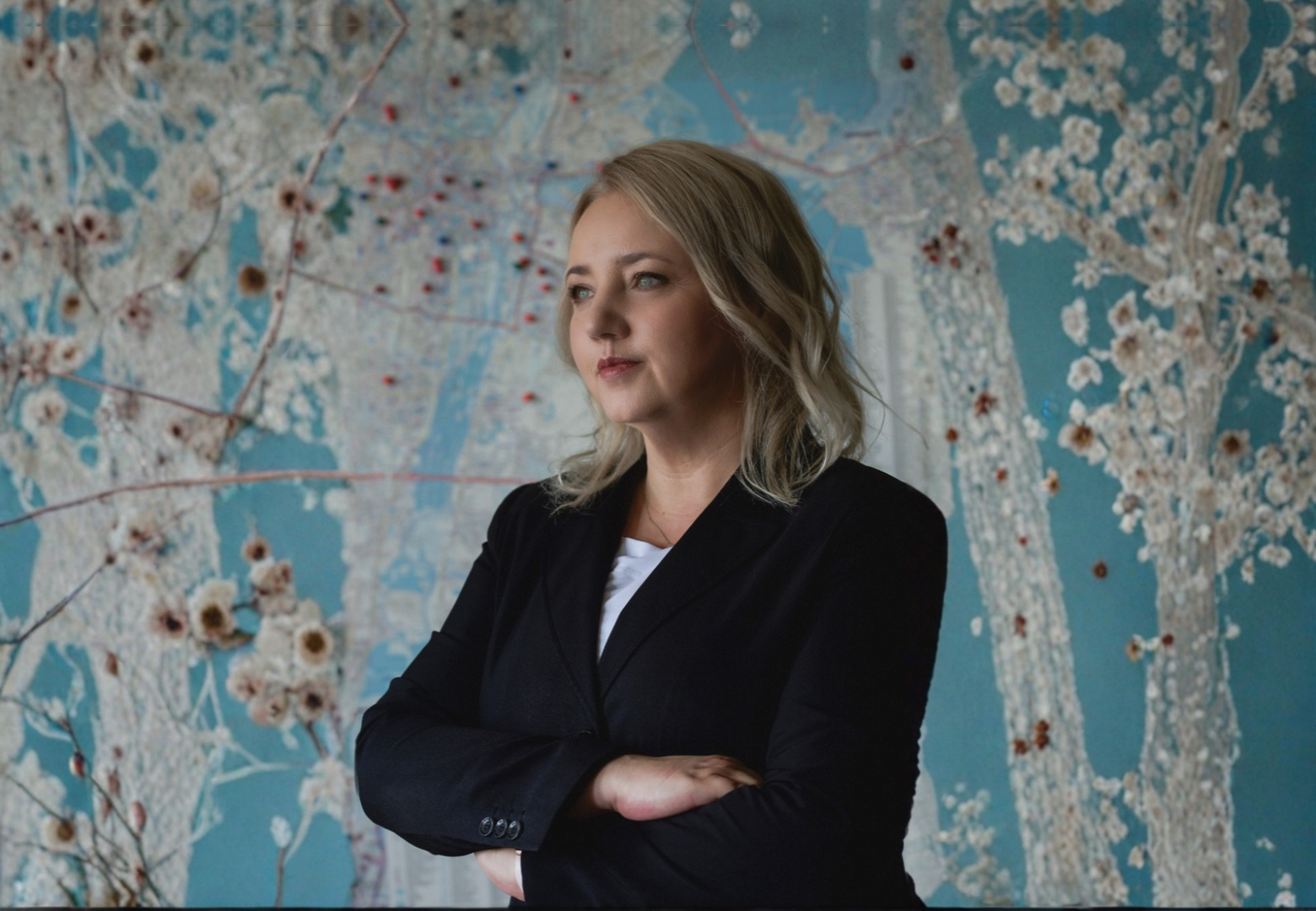
Magdalena Pietrusik-Adamska, Deputy Mayor of Poznań: “In Poznań, our budget for cultural activities increases year on year. Culture is what defines our identity.”
Magdalena Pietrusik-Adamska is Deputy Mayor of Poznań since June 2026, responsible for social assistance, health, cooperation with NGOs, culture and business activity. A graduate of Law at Adam Mickiewicz University in Poznań, with several postgraduate management programmes, she has more than 25 years of experience in local government, around ten of them as Director of the Department of Health and Social Affairs at Poznań City Hall, until June 2026.
She is Chair of the Social Policy Committee of the Union of Polish Cities and Chair of the Social Policy and Health Committee of the Union of Polish Metropolises.
In this interview, Magdalena Pietrusik-Adamska answered our questions about leadership and New Public Governance, women’s rights, menopause and women’s health, care work, the role of culture, social services and resilience.
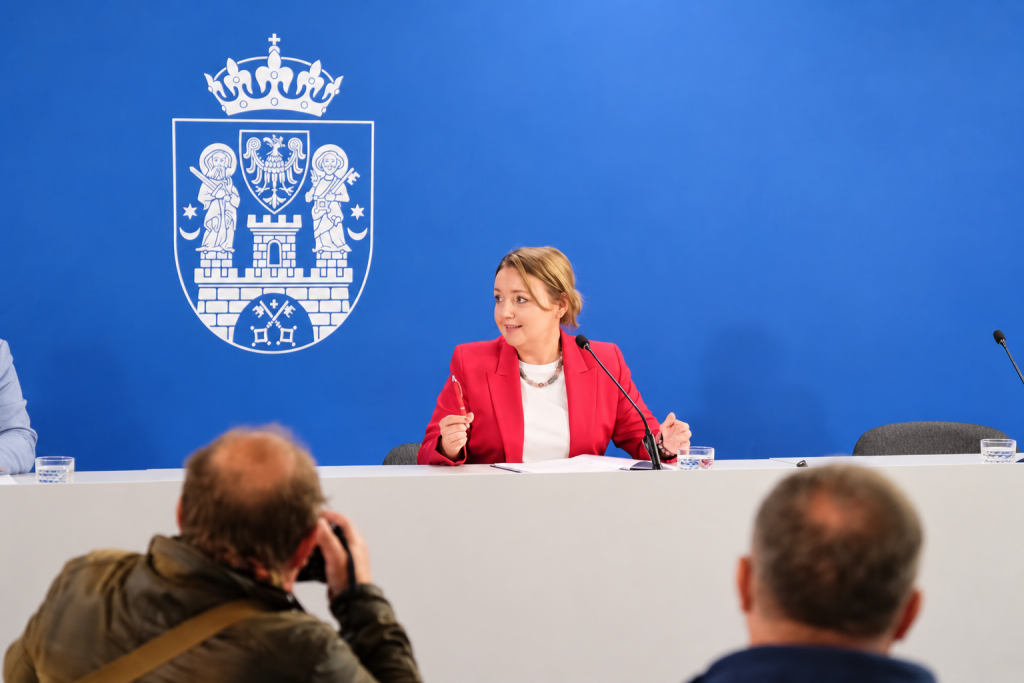
We were so sorry to miss you at Impact SEE’26 in Bucharest, where almost 3,000 people came together to talk about business, leadership and the future of our region. If you had been on that stage, what would you most have wanted to say to the people in the room? 🙂
We were going to talk about leadership, how we were achieving our goals and making our city a more comfortable place for its residents. I am a staunch advocate of New Public Governance.
From the perspective of a deputy mayor of a large city responsible for designing and implementing public social services, a key competency is the ability to establish and maintain relationships with both colleagues and residents, based on respect for diversity and differing opinions. This is precisely the approach I take to achieving local government objectives and implementing solutions and services that address the diverse needs of residents.
Poznań’s policy for older people was developed through extensive public consultation. When developing and implementing solutions in areas such as transport, housing, care, health and social engagement, we consulted a wide range of stakeholders, including older people themselves, their carers, family members, NGOs, the academic community, and representatives of businesses and institutions.
Your voice on women’s rights is clear and articulate, and it runs through much of your public work. Was there a moment, a person or an experience that made this a cause you carry personally, beyond your role?
For me, equality between women and men has always been a natural part of life. I grew up in a family where equal rights were not something that needed to be declared – they were simply a given.
The same was true of my husband’s family. As a result, gender equality has always been a matter of course in my private life.
My professional life was where my work towards gender equality began. It was through encountering the challenges faced by many women – including physical and economic abuse and various forms of gender-based discrimination and exclusion – that I became committed to advancing gender equality.
On the 4th of October this year, Poznań hosts Klimat Kobiecości, a day dedicated to menopause and women’s health, with free preventive checks and talks with specialists. What made you feel the city should open this conversation in public, and what do you hope women take home from it?
For many years, menopause was a taboo subject in Poland. Indeed, I get the impression that it was not only taboo but also stigmatised. While womanhood was often defined in biological terms, particularly in relation to puberty and fertility, menopause was seen as something “wrong” – a stage of life that left women feeling ashamed.
Moreover, no one ever taught us what to expect as we approached our fifties or what physiological changes and challenges we might face.
“We were never told that menopause could be a beautiful stage of our lives – a time when our maturity and life experience enable us to become true authorities in our own right.”
This is the message I want the women of Poznań to take away from our event.
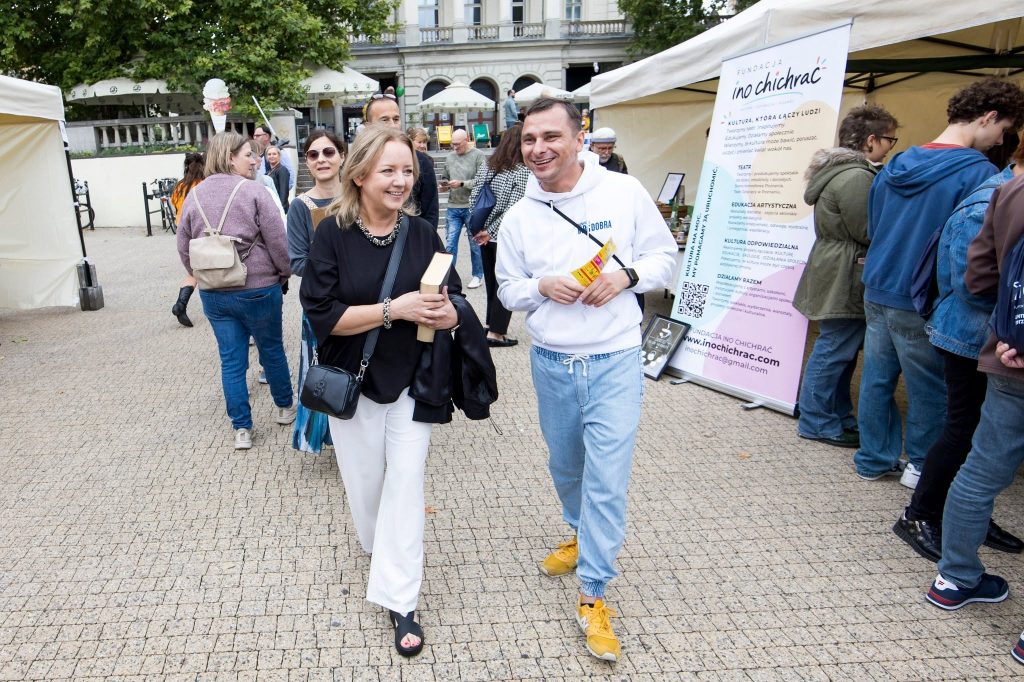
Menopause is still too often reduced to jokes or silence, even though the women going through it are frequently at the peak of their careers and leading their communities. What does a city or an employer lose when this stays in the shadows, and where do you see the biggest gaps in how women’s health is addressed?
Yes, I believe that the strength and professionalism of middle-aged women can be intimidating to men who have been raised in a patriarchal environment. It is possible that this very fear and sense of insecurity lead to inappropriate jokes.
The truth is that, in today’s world, organisational development is not just about investment or financial management.
“Organisational development today is, above all, about a relationship-based approach to leadership – listening to others, showing empathy, working collaboratively and valuing diversity. These are areas in which women excel.”
Poznań has put women’s health on the public agenda, with free screenings and open conversations about menopause. Beyond health, where do you still see the biggest gaps in women’s everyday lives in the city, for example in care work or safety?
Life circumstances and long-standing social norms have traditionally assigned women the role of carers. It is primarily women who look after children and older people. This situation not only limits women’s opportunities for personal fulfilment but can also stigmatise men who are willing – and often deeply committed – to caring for their family members. I believe this is something we need to work together to change.
In your experience, what has been different about the decisions Poznań has made when women were part of the conversation? Is there a policy or project where you can see that difference?
Honestly, I cannot recall a time when women did not have a voice. We have been holding public consultations for years, and anyone living in Poznań can take part in them.
Culture is often the first thing to feel the pressure when budgets tighten, yet it’s what makes a city feel like home. What role does it play in Poznań’s vision for the future, and how do you make the case for it when other priorities seem more urgent?
In Poznań, things are different. Our budget for cultural activities increases year on year. We fund both the running costs of municipal cultural institutions and projects carried out by non-governmental organisations.
Culture is very important to us. It is culture that defines a nation and shapes who we are. That is why, as long as we can, we avoid cutting the culture budget.

Social services are where a city’s values become visible in people’s lives. Where do you feel local administration can make a real difference, and where do you meet its limits?
The role of local government is to support residents in their daily lives. Local authorities provide social services to people experiencing difficult circumstances, whether due to age, unemployment, disability or other factors. The aim of this support is to help people overcome difficult periods in their lives.
However, we must recognise that each of us – whether as a brother, sister, neighbour or friend – has a responsibility towards others. Demographic projections, coupled with the growing pressure on formal care services, mean that mutual support will become increasingly important.
For this reason, in Poznań, we place great emphasis on intergenerational integration as a way of strengthening human connections and fostering a greater sense of community.
Resilience is a word we often use to praise women, and it can quietly turn into an expectation. At The Woman, we’re exploring where strength ends and exhaustion begins. What does healthy resilience look like to you, and what are the signs that it has tipped into too much?
Yes, that’s true. The line between resilience and exhaustion is invisible to those around us… This is because women often feel such a strong need to prove their strength and professionalism that they have learned to conceal their personal crises and dips in performance. From there, it is only a short step to depression.
“Each of us has a responsibility to take care of herself; if we don’t look after ourselves, we won’t be able to care for others.”
Let’s not push ourselves to the point of total powerlessness. Instead, let’s prioritise our well-being – make time for rest, ideally out in nature, enjoy the company of friends, or lose ourselves in a good book.
Speaking of resilience – many of the women at Klimat Kobiecości will be leading at work, caring for family and looking after their own health, often all in the same week. If you could add one concrete service to the city’s offer to make that easier, whether it’s childcare, elder care, flexible health appointments or something else, what would it be and why?
The municipal authorities of Poznań place great emphasis on supporting families in their caring responsibilities. We provide places in nurseries and kindergartens, as well as care services for older people. However, if I were to add one more service to our existing range of support, it would be respite breaks for parents and carers who provide round-the-clock care for children with disabilities, with appropriate care arrangements in place for the children during that time.

As we close, what is the one idea you would like to leave with the people who were at Impact SEE’26, and with our readers in Romania who are getting to know you through this conversation?
I would like to send my warmest regards to all the participants. I sincerely regret that I was unable to be there with you in person. And what would I like to say to you? Perhaps this: the most important thing in life is our relationship with other people.
“How we treat others defines who we are. Let us make this our guiding principle, both in our private and professional lives.”
Your favorite way to spend the Sunday:
With my family and friends.
A book you return to when you need inspiration is…
Lately and, unfortunately, “How Fascism Works. Us versus them” by Jason Stanley.
What your personal style says about you…
Difficult question, maybe: “be good, feel good, be happy”.
Your leadership style in three words:
Listen. Achieve. Motivate.
Why go into public service…
You can improve people’s lives.

Why not go into public service…
You are a target for haters.
–
Impact SEE’26, presented by Mastercard, brought together almost 3,000 participants and approximately 200 speakers at the Romexpo Exhibition Center and Face Convention Center, on 29–30 September. The third Bucharest edition featured three main stages and eight thematic tracks, two of them introduced for the first time this year: Investments & Startups and Culture. The programme also included the Impact Bookstore, a space dedicated to books and meetings with the authors present at the event.

Autor: Carina Cichi
Iubind să spună povești care merită să fie auzite prin scris, Carina-Marisa Cichi consideră că fiecare dintre noi are datoria să-i confere o definiție proprie „succesului”. Pentru ea, succesul înseamnă să aibă privilegiul să trăiască, în fiecare zi, din și prin scris, spunând povești: pentru publicațiile pentru care scrie, pentru brandurile alături de care creează, și pe platformele prin care ea comunică. Își dorește să spună câte o poveste prin pasiunea ei pentru fotografia pe film; prin designerii români pe care-i poartă; și, bineînțeles, prin interviurile pe care le realizează cu drag, cu femei deosebite, pentru The Woman.
You may also like
Etichetă și bune maniere în călătoriile cu avionul? Descoperă 10 reguli specifice!
Codul bunelor a apărut ca un răspuns firesc la probleme cotidiene ale societății. Pentru călăt

Tu ce ai învățat ultima oară când ai vorbit cu cineva?
Se știe că arta conversației este una dintre cele mai vechi forme de dezvoltare a oamenilor. Dove

Consiglieri DONNA redefinește eleganța feminină prin experiența Custom Made
Având la bază tradițiile sartoriale destinate bărbaților, brandul Consiglieri a făcut un pas f
