

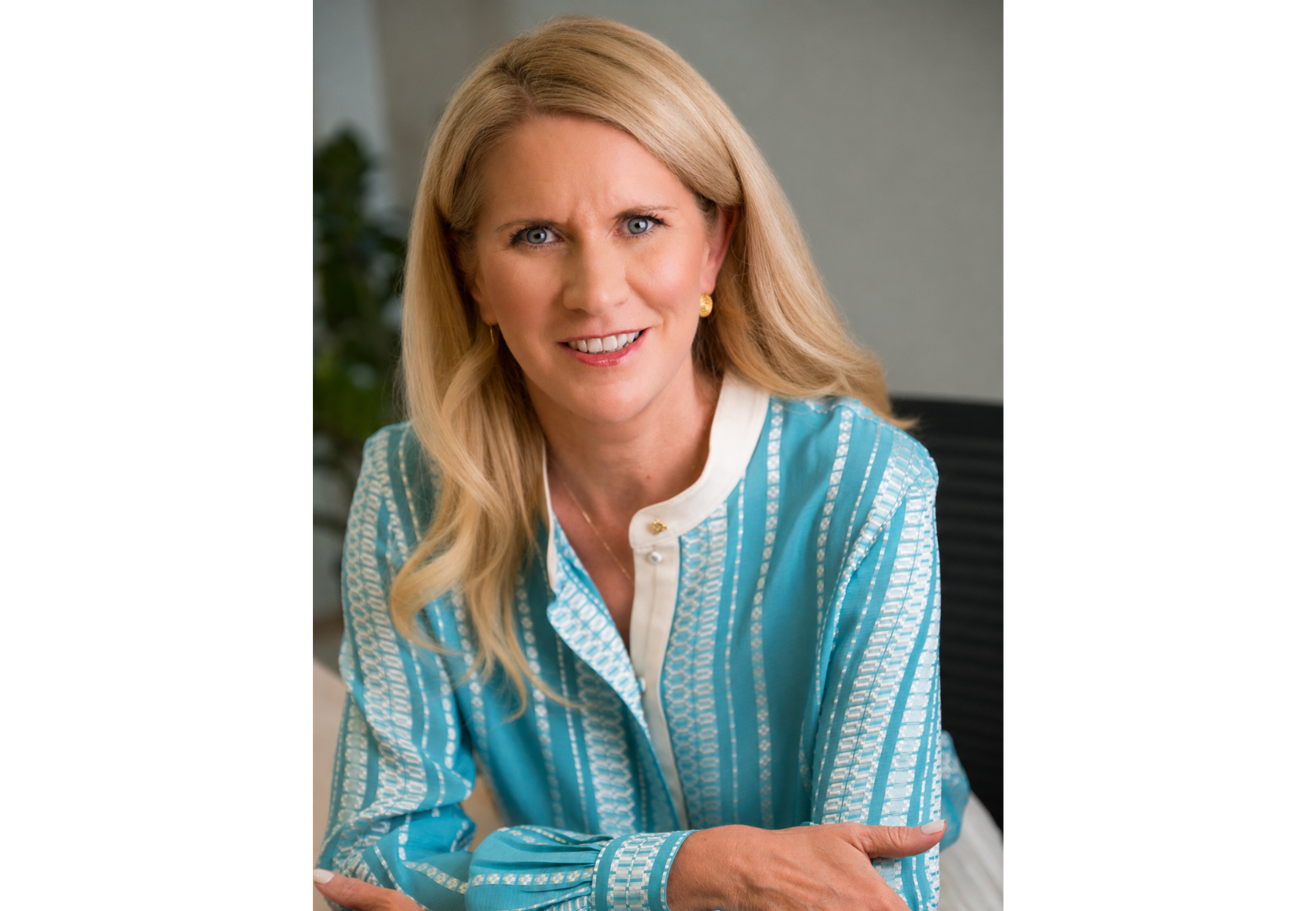
Andreea Moraru, Managing Director EBRD for CEE and the Baltic States: ”The real measure of success is often not the project itself, but whether it encourages others to follow”
Andreea Moraru is Managing Director for Central Europe and the Baltic States at the European Bank for Reconstruction and Development (EBRD).
With over 20 years of experience in international finance and leadership, Andreea Moraru has built her career at the intersection of investment, economic transformation and sustainable development. Today, she contributes to implementing the EBRD’s strategic priorities, from accelerating the transition to a green economy and strengthening competitiveness through innovation and digitalisation to enhancing resilience and economic integration.
Beyond figures, investments and decisions with an impact on entire markets, her experience has shaped a perspective on leadership in which trust, adaptability, clarity and the ability to work with people and across different contexts have become essential.
This year, Andreea Moraru took the stage at IMPACT CEE as part of the panel “The New Economic Playbook: Banking, Stability, and Growth in a World of Uncertainty.” The discussion explored the new rules shaping the global economy, the role of the banking sector, stability, and growth prospects in an increasingly uncertain environment.
In this interview, she talks about decisions that can shape long-term economic trajectories, the green transition, leadership in an international context, and what it ultimately means to create impact through people, institutions and markets.
Looking back at your more than 20 years of experience, what were the defining inflection points that most significantly reshaped your leadership philosophy, and what specifically changed in how you lead after each of them?
Looking back over more than 20 years at EBRD, two moments stand out as having fundamentally shaped my leadership philosophy.
The first was the global financial crisis of 2008. At the time, I was based in London in the Financial Institutions team, working closely with banks across the region. Almost overnight, institutions that were strong and stable found themselves under enormous pressure. It was a period of uncertainty, difficult decisions and intense engagement with clients.
What changed for me was my understanding of leadership under pressure. I learned that in times of crisis, technical expertise is important, but it is not enough. People look for clarity, composure and consistency. I saw first-hand the value of staying calm when others are anxious, making decisions with imperfect information, and maintaining a long-term perspective even when short-term conditions are challenging. Since then, I have tried to lead by providing stability and clear direction, particularly during periods of uncertainty.
The second defining moment was the Covid-19 pandemic. In 2020, I had just moved to Greece to take on the role of Regional Director for Greece and Cyprus. I was stepping into a new country, a new team and a new client base, and almost immediately the world went into lockdown. I did not have the opportunity to build relationships in the traditional way. Instead, I got to know team members through long walks outdoors, keeping a one-metre distance, and through countless virtual meetings with clients and stakeholders.
That experience reinforced for me that leadership is fundamentally about human connection and trust. The pandemic taught me the importance of empathy, listening and being accessible. It also showed me that strong teams are built through genuine relationships, not hierarchy. Since then, I have invested even more in understanding people’s motivations, creating an environment where colleagues feel supported and empowered, and leading with authenticity.
Together, these two experiences shaped the leader I am today. The financial crisis taught me the importance of resilience and decisiveness, while Covid reinforced the power of empathy and connection. If I had to summarise my leadership philosophy today, it would be: stay calm in uncertainty, stay close to people, and trust teams to deliver their best when they feel supported and empowered.
You have worked across very different regions – Central and Eastern Europe, Turkey, and North Africa. How have these contexts challenged your assumptions about leadership, and what have you had to deliberately unlearn in order to be effective in each?
Having worked across Central and Eastern Europe, Turkey and North Africa, one of the biggest lessons for me has been that effective leadership is not about applying the same playbook everywhere. Different markets may face similar business challenges, but the cultural, historical and institutional contexts can be very different.
Over time, I have learned the importance of investing time to understand a country’s history, social norms and cultural dynamics before making assumptions about how people work, communicate or make decisions. What motivates teams, how trust is built, how decisions are reached, and how people respond to authority can vary significantly from one place to another.
Perhaps the most important thing I have had to deliberately unlearn is the assumption that my own perspective is the default one. We all carry unconscious biases shaped by our backgrounds and experiences. Leading across multiple regions has taught me to challenge those assumptions, listen more carefully, and approach situations with curiosity rather than certainty.
I have found that leadership becomes much more effective when you spend time understanding the local context, adapting your approach, and meeting people where they are. While the core principles of leadership, such as integrity, respect and accountability, remain constant, how those principles are applied often needs to be tailored to the environment.
These experiences have reinforced my belief that the best leaders are not those who have all the answers, but those who remain open to learning, are culturally aware, and can bring together diverse perspectives around a common goal.
As a Managing Director for CEE and the Baltics at the European Bank for Reconstruction and Development, how do you translate a broad institutional mandate into day-to-day decisions that genuinely influence long-term economic trajectories?
I see my role as translating a broad institutional mandate into thousands of individual decisions that, collectively, shape long-term economic outcomes on the ground. The EBRD’s mandate is ambitious: supporting sustainable market economies, accelerating the green transition, strengthening competitiveness and fostering resilience. The challenge is turning those objectives into tangible actions on the ground.
For me, that starts with asking a simple question: what difference will this decision make in five, ten or twenty years’ time? Whether we are evaluating an investment, engaging in policy dialogue, or allocating resources, I look beyond the immediate transaction and focus on the broader impact. Will it help a country become more competitive? Will it accelerate decarbonisation? Will it deepen capital markets, improve governance, or unlock private sector investment?
In Central Europe and the Baltics, many economies are already relatively advanced, so our role is often less about providing capital and more about helping markets tackle the next generation of challenges. That means supporting innovation, energy security, capital market development, affordable housing, digitalisation and productivity growth. We try to identify areas where EBRD can be catalytic and where our involvement can help unlock change that extends well beyond a single project.
A second critical element is partnership. Long-term economic transformation is never achieved by one institution alone. A significant part of my day-to-day work involves engaging with governments, clients, investors and colleagues to build alignment around common objectives. Often, our greatest impact comes from combining investment with policy dialogue and knowledge transfer.
Finally, it comes down to people. Economic trajectories are shaped by institutions, and institutions are built by people. That is why I spend a great deal of time developing teams, empowering colleagues and creating an environment where people can take ownership and make decisions. If we build strong teams that consistently make sound decisions aligned with our mandate, the impact compounds over time.
Ultimately, I have always viewed our work not as financing individual projects, but as helping countries navigate major economic transitions. Every decision is an opportunity to move a market a little further towards being greener, more competitive, more resilient and more inclusive.
How do you practically balance short-term economic growth pressures with long-term green transition goals, especially when different countries in your portfolio are at very different stages of development and political readiness?
I do not see short-term growth and the green transition as competing objectives. In fact, increasingly they are linked. The countries that invest early in energy efficiency, renewables, grid resilience, cleaner transport and industrial decarbonisation will be better positioned to attract investment, remain competitive and reduce their long-term vulnerabilities.
The practical challenge is that countries are at very different stages of development and political readiness. Some markets already have strong policy frameworks, available private capital and a clear decarbonisation agenda. Others are still dealing with affordability concerns, energy security, legacy infrastructure or industries that are difficult to transition. So the approach cannot be one-size-fits-all.
In practice, I try to balance this in three ways.
First, by being realistic about sequencing. We need to support countries where they are today, while helping them move in the right direction. That may mean starting with energy efficiency, district heating, grid upgrades, or cleaner public transport before moving to more complex decarbonisation pathways.
Second, by linking green objectives to economic competitiveness. The green transition is much easier to advance when it is framed not only as a climate agenda, but also as an investment, productivity and resilience agenda. For companies, this can mean lower energy costs, access to new markets, better financing terms and stronger investor confidence. For countries, it can mean improved energy security and a more modern infrastructure base.
Third, by combining investment with policy dialogue. Finance alone is not enough. In many markets, the key constraint is not the absence of capital, but the regulatory framework, permitting, grid access, tariff structures or institutional capacity. This is where EBRD can add real value, by working with governments and the private sector to create the conditions for sustainable investment.
Of course, there are trade-offs. We need to be conscious of social impact, affordability and political realities. But we should not dilute the long-term direction. The role of institutions like EBRD is precisely to help countries manage this transition in a way that is ambitious, but also practical and credible.
So for me, the balance is about maintaining a clear long-term compass, while being flexible and pragmatic on the pathway. The destination is the same, but the route will differ from country to country.
What are the most structural, not surface-level, barriers you encounter in accelerating the green economy transition in your region, and where do you see the biggest leverage points for real acceleration?
One of the key lessons from working on the green transition across Central Europe and the Baltics is that the biggest barriers are rarely technological. The technologies largely exist, and in many cases their economics are increasingly compelling. The real challenges are structural: mobilising sufficient long-term capital, upgrading infrastructure, and managing one of the largest economic transformations of our generation.
First, there is the issue of infrastructure and system readiness. Across much of the region, renewable energy deployment is moving faster than the supporting infrastructure. Grid constraints, permitting bottlenecks, and the need for storage and network modernisation are often bigger obstacles than financing. We need to think about the entire energy system, not just individual projects.
Second, there is the challenge of mobilising long-term capital at scale. The green transition requires trillions of euros of investment over decades. Public institutions can play a catalytic role, but ultimately the scale of financing needed can only come from private capital. This requires stable policy frameworks, bankable projects, deeper capital markets and mechanisms that help investors manage risk over long investment horizons.
Third, there is the challenge of policy consistency and predictability. Green investments are typically made over 20-30 year horizons. Investors need confidence that regulatory frameworks will remain stable and that climate objectives will be pursued consistently across political cycles.
Finally, the transition is an economic and social transformation, not just an environmental one. Countries are balancing decarbonisation with energy security, industrial competitiveness and affordability. The transition will only be sustainable if businesses and citizens see it as an opportunity for economic growth, innovation and job creation, rather than simply a cost to be absorbed.
When I look at the biggest leverage points, the first is undoubtedly grid investment and energy system flexibility. Every euro invested in transmission, distribution, storage and digitalisation has a multiplier effect because it unlocks significantly larger volumes of renewable investment.
The second is mobilising private capital at scale. Institutions such as the EBRD can help bridge gaps, demonstrate new technologies and crowd in investors, but success will depend on creating the conditions for pension funds, insurers, asset managers and other long-term investors to participate much more actively in the transition.
The third is innovation and competitiveness. Central Europe and the Baltics have the opportunity not only to decarbonise their economies, but also to build new industries, strengthen supply chains and become leaders in areas such as advanced manufacturing, clean technologies, battery storage and digital solutions.
Ultimately, the countries that will move fastest are not necessarily those with the most ambitious targets, but those that create the right conditions for investment, innovation and implementation. That is where the real acceleration lies, and where I believe institutions like the EBRD can make the greatest difference.
In coordinating EBRD activities across eight countries, how do you distinguish between projects that are financially sound and those that are truly transformative in terms of systemic impact?
In a development institution, financial soundness is a prerequisite, not the objective. A project must be financially viable, but what makes it truly compelling is its ability to create change beyond the transaction itself.
When looking across eight countries, I often ask a simple question: if we did not finance this project, what would be different? If the answer is „not much,” then however good the transaction may be, its impact is likely to be limited. Transformative projects are those that create effects far beyond the immediate investment.
The first thing I look for is whether a project addresses a systemic constraint. Does it solve a bottleneck that is holding back an entire sector or market? For example, investments in electricity grids, energy storage, affordable housing platforms, or capital market infrastructure can unlock activity and investment well beyond a single company.
Second, I consider the demonstration effect. Some of the most impactful projects are the first of their kind. They introduce new technologies, financing structures or business models that others can replicate. The real measure of success is often not the project itself, but whether it encourages others to follow.
Third, I look at the project’s ability to mobilise private capital. The scale of today’s challenges, particularly around the green transition, is far beyond the capacity of public institutions alone. The most transformative projects are often those that attract new investors, create confidence in a market and crowd in significantly larger volumes of private investment.
Finally, I assess whether the project contributes to long-term economic resilience and competitiveness. Does it help a country become greener, more productive, more innovative or more resilient to future shocks? Those are the outcomes that ultimately shape economic trajectories.
For me, transformational impact is not measured by the size of a transaction, but by the size of its ripple effects. The best projects leave something behind: a stronger market, a better regulatory framework, a new industry, deeper capital markets, or greater energy security. That is how individual investments become drivers of long-term economic change.
What does “business delivery” mean in a multilateral institution like the EBRD at a regional level, and how do you ensure that execution quality is aligned with strategic intent beyond purely financial metrics?
In a multilateral institution like the EBRD, business delivery is about much more than volume. It is not simply about how much we invest or how many projects we sign. It is about delivering our mandate through investments, policy engagement and partnerships that create lasting impact.
At a regional level, my role is to ensure that what we do on a day-to-day basis remains aligned with what we are trying to achieve over the long term. That means constantly balancing execution with strategy. It is easy to become focused on transactions, but the real question is whether those transactions are moving a country or a sector in the direction we want to see.
For me, successful business delivery rests on three pillars.
First, strategic selectivity. We cannot do everything, so we need to focus on areas where the EBRD can be truly additional and catalytic. Whether it is energy transition, capital market development, affordable housing or private sector competitiveness, we need to ensure that our resources are directed towards areas where we can have the greatest impact.
Second, quality of execution. In development finance, how we deliver is just as important as what we deliver. This includes strong project preparation, rigorous due diligence, sound risk management and close collaboration across banking, policy and support teams. Good execution creates credibility with clients, investors and policymakers, which in turn enables us to have greater influence over time.
Third, people and culture. No strategy succeeds without strong teams. A significant part of my role is creating an environment where people are empowered to take ownership, collaborate across countries and sectors, and make decisions that are consistent with our values and objectives. The quality of our business delivery ultimately reflects the quality of our people.
Beyond financial metrics, I look at a broader set of indicators. Are we mobilising private capital? Are we helping clients improve governance? Are we supporting policy reforms? Are we accelerating decarbonisation, strengthening resilience or improving competitiveness? Most importantly, are we creating outcomes that will still matter long after the financing has been repaid?
*Ultimately, business delivery at the EBRD is about turning strategy into measurable impact. Financial performance matters, but success is defined by whether our investments, policy dialogue and partnerships leave markets stronger, more resilient and better positioned for sustainable growth.
What tools or mechanisms have proven most effective in actually unlocking green investment at scale in your markets, beyond policy frameworks and high-level commitments?
One thing I have learned over the years is that capital is rarely the only constraint. In many of the markets where we operate, there is significant investor interest in green projects. What often prevents investment from happening at scale is the lack of bankable projects, appropriate risk-sharing mechanisms, or the right market infrastructure.
Several tools have proven particularly effective.
First, blended finance and risk-sharing instruments. These can help bridge the gap where projects are commercially viable in the long term but face higher upfront costs or perceived risks. By combining concessional finance, guarantees or technical assistance with private capital, we can crowd in investors who might otherwise stay on the sidelines.
Second, demonstration projects. One successful transaction can be more powerful than many policy papers. We have seen this repeatedly with renewable energy, battery storage, green buildings and sustainable infrastructure. Once investors and lenders see that a project works commercially, markets tend to follow quickly.
Third, developing local capital markets. Scaling the green transition requires more than bank lending. Green bonds, sustainability-linked instruments and stronger institutional investor participation create a much deeper pool of capital that can finance the transition over the long term. This is particularly important in Central Europe and the Baltics, where capital market development remains uneven.
Fourth, advisory support alongside financing. Many companies, especially mid-sized firms, know they need to decarbonise but are unsure where to start. Helping them identify investment opportunities, measure emissions, improve governance and prepare projects is often what turns ambition into investable opportunities.
Finally, I would highlight the importance of energy security as a catalyst for green investment. In recent years, concerns about energy independence and resilience have accelerated investments in renewables, storage, grids and efficiency measures. When green investments are seen not only as climate solutions but also as drivers of competitiveness and security, they gain much broader support.
For me, the biggest lesson is that unlocking green investment at scale requires an ecosystem approach. You need finance, risk mitigation, technical expertise, functioning capital markets and supportive institutions working together. When those elements align, capital moves much faster than many people expect.
What shifts, if any, have you observed in the pace and authenticity of women’s representation in senior leadership within international finance, and what still remains largely unchanged beneath the surface?
Over the course of my career, I have seen a meaningful shift in women’s representation in senior leadership across international finance. There are certainly more women in decision-making roles today than when I started, and there is greater recognition that diverse leadership teams make institutions stronger. The conversation has moved from whether diversity matters to how we can accelerate progress.
At the same time, I think the most important change has been one of authenticity. Earlier in my career, there was often an implicit expectation that women needed to adapt to existing leadership norms to succeed. Today, I see many more women succeeding by leading in their own way, bringing different styles, perspectives and strengths to the table. That is a positive development because effective leadership does not come in a single model. Looking back at my own career, I feel incredibly fortunate to have benefited from the support, mentorship and sponsorship of a number of remarkable women leaders. They opened doors, challenged me, encouraged me to take on opportunities outside my comfort zone and helped shape the leader I am today. Their support taught me the importance of lifting others as you progress. As a leader, I feel a responsibility to do the same by supporting and developing the next generation of women leaders, creating opportunities for them to grow and succeed.
That said, beneath the surface, some challenges remain remarkably persistent. Representation at entry and mid-management levels has improved significantly, but the pipeline often narrows as responsibilities become more senior. The reality is that many women still face disproportionate expectations around balancing professional and personal responsibilities, and these challenges can influence career progression in ways that are not always visible in statistics.
I also think that, despite progress, people are sometimes still judged differently for exhibiting the same behaviours. Characteristics that are often viewed positively in male leaders may be interpreted differently when displayed by female leaders. While this is improving, cultural expectations can take much longer to change than organisational policies.
What gives me optimism is that younger generations increasingly expect inclusive leadership as the norm rather than the exception. They value collaboration, authenticity and diverse perspectives. As institutions, our role is to ensure that talent can thrive based on merit and potential, and that leadership teams reflect the societies and markets we serve.
Ultimately, the goal should not simply be to increase the number of women in senior positions. It should be to create environments where people from different backgrounds can contribute fully, lead authentically and have equal opportunities to succeed. That is when diversity moves from being a metric to becoming a genuine source of organisational strength.
Looking back, what personal values have acted as non-negotiable anchors in moments of high pressure or ambiguity, when there was no clearly “right” answer?
Trust has probably been the most important anchor throughout my career, especially in situations where there was no obvious right answer.
In leadership, particularly during periods of uncertainty or crisis, decisions often have to be made with incomplete information. In those moments, I have learned to trust both my values and my people. If you have built a strong team, surrounded yourself with capable colleagues, and created an environment where people are encouraged to speak openly, trust becomes one of the most powerful tools a leader has.
The 2008 financial crisis and the Covid pandemic reinforced this belief. Both were periods when there were few precedents and no perfect solutions. What mattered most was being transparent, staying true to your principles, communicating honestly, and trusting people to rise to the challenge. I have found that teams perform at their best when they feel trusted rather than controlled.
Trust is also closely linked to integrity. Throughout my career, I have tried to make decisions that are consistent with my values, even when they are difficult or unpopular. People may not always agree with a decision, but they can accept it if they understand the reasoning and trust the person making it.
If I had to identify one non-negotiable principle, it would be this: trust is something you build over years and can lose very quickly. In moments of pressure and ambiguity, protecting that trust, through integrity, transparency and respect for others, has always guided my decisions.
How has your definition of success evolved over time, particularly as your responsibilities have shifted from individual deals to regional system-level impact?
My definition of success has evolved significantly over the course of my career. Early on, success was naturally linked to individual transactions: executing a complex deal, solving a difficult problem for a client, or delivering a strong result. Those experiences were invaluable because they taught me the importance of discipline, execution and attention to detail.
As my responsibilities grew from managing individual investments to leading teams, countries and now a region, my perspective changed. I came to realise that while transactions matter, they are ultimately a means to an end. What matters most is the impact they create and whether they contribute to broader economic transformation.
Today, I see success through a much longer-term lens. It is about whether we helped create a stronger financial sector, accelerated the green transition, deepened capital markets, improved governance, or enabled private investment to flow where it otherwise would not have. The most rewarding part of the job is seeing how a decision or investment can influence an entire market, rather than just a single company.
My definition of success has also become much more people-focused. Earlier in my career, I tended to measure success by what I delivered personally. Today, I measure it by what the team achieves together. Seeing colleagues develop, take on greater responsibilities, and succeed in their own careers is one of the most satisfying aspects of leadership.
Perhaps most importantly, I have learned that success is not only about results, but also about how those results are achieved. Delivering impact while maintaining trust, integrity and strong relationships is just as important as achieving the outcome itself.
Today, if I had to define success in one sentence, I would say it is creating lasting impact through people, institutions and markets, while leaving them stronger than you found them.
Coffee or tea? –Coffee
What is something small but essential that you always carry with you, and why is it important in your day-to-day rhythm?
I always carry a small notebook. Despite all the technology available today, I still find value in writing things down. It helps me organise my thoughts, capture ideas as they emerge, and reflect on discussions. In a role that involves constant travel, meetings and decision-making, having a place to pause and structure my thinking is surprisingly valuable.
What is the first thing you do in the morning that helps you mentally set the tone for a high-stakes day?
For me, it starts with movement. No matter how demanding the day ahead looks, I make time for exercise, whether it’s a jog, a Pilates session, some weight training, or simply stretching. That time is not just about physical fitness; it helps me clear my mind, focus my priorities, and create the mental energy needed for high-stakes decisions. By the time I start my workday, I feel more grounded, disciplined, and ready to approach challenges with a clear head and a calm perspective
What book currently sits on your nightstand, and why did it resonate enough to be there right now?
I am a great admirer of Elif Shafak’s work and have read many of her books over the years. What I appreciate most is her ability to explore complex themes such as identity, belonging, cultural differences and human connection with both depth and empathy. Having worked across very different countries and cultures, I find her perspective particularly resonant. Her writing is a reminder that understanding people requires curiosity, openness and a willingness to see the world through different lenses, qualities that are just as important in leadership as they are in life.
If you had to write a single “note to self” for this stage of your career, what would it say?
Trust your people and focus on what truly matters.
As responsibilities grow, it becomes increasingly important to resist the temptation to be involved in everything. The greatest impact comes from empowering others, keeping sight of the bigger picture, and remembering that leadership is not about having all the answers, but about creating the conditions for others to succeed.
Over time, I have come to realize that what matters most is not only the deals we close or the targets we achieve, but the impact we have on the people we work with and the relationships we build along the way. If I can help others grow, gain confidence, and achieve more than they thought possible, that is the legacy I would like to leave behind.
–
Read the interview in Romanian here.
–
IMPACT SEE, presented by Mastercard, will take place on September 29–30, 2026, in Bucharest. The event will bring together more than 3,000 international participants and 200 speakers, who will take the stage across two interactive stages and explore nine key themes: artificial intelligence, cybersecurity and digital resilience, banking and the global economy, digital commerce, the green economy, leadership, investments and startups, marketing and digital consumers, and culture.
Confirmed speakers include Ryan Reynolds, Anna Lembke (Stanford University), Carlos Mulas-Granados (International Monetary Fund), Ilian Mihov, former Dean of INSEAD and Professor of Economics, Ömer Tetik, CEO of Banca Transilvania, as well as leaders from Mastercard, Uber, NETOPIA, BCR, OMV Petrom, and other companies and institutions shaping the future of the region.
More information about the event and tickets is available on the official website: impactbucharest.com.
–
Redactor: Mara Lazăr
You may also like
Anna Lembke: ”It’s important to try to use the technology as a tool and not as a drug”
The line between pleasure, habit, and addiction can be difficult to recognize, especially when rewar
Impact SEE’26 anunță agenda. Dr. Anna Lembke și Ryan Reynolds printre speakerii prezenți
Ryan Reynolds, Dr. Anna Lembke, Ilian Mihov și David Popovici se numără printre cei aproximativ 2
Andreea Moraru, Managing Director BERD pentru CEE și Țările Baltice:„Adevărata măsură a succesului nu este adesea proiectul în sine, ci dacă îi încurajează și pe alții să-i urmeze exemplul.”
Andreea Moraru este Managing Director pentru Europa Centrală și țările baltice în cadrul Bănci
