

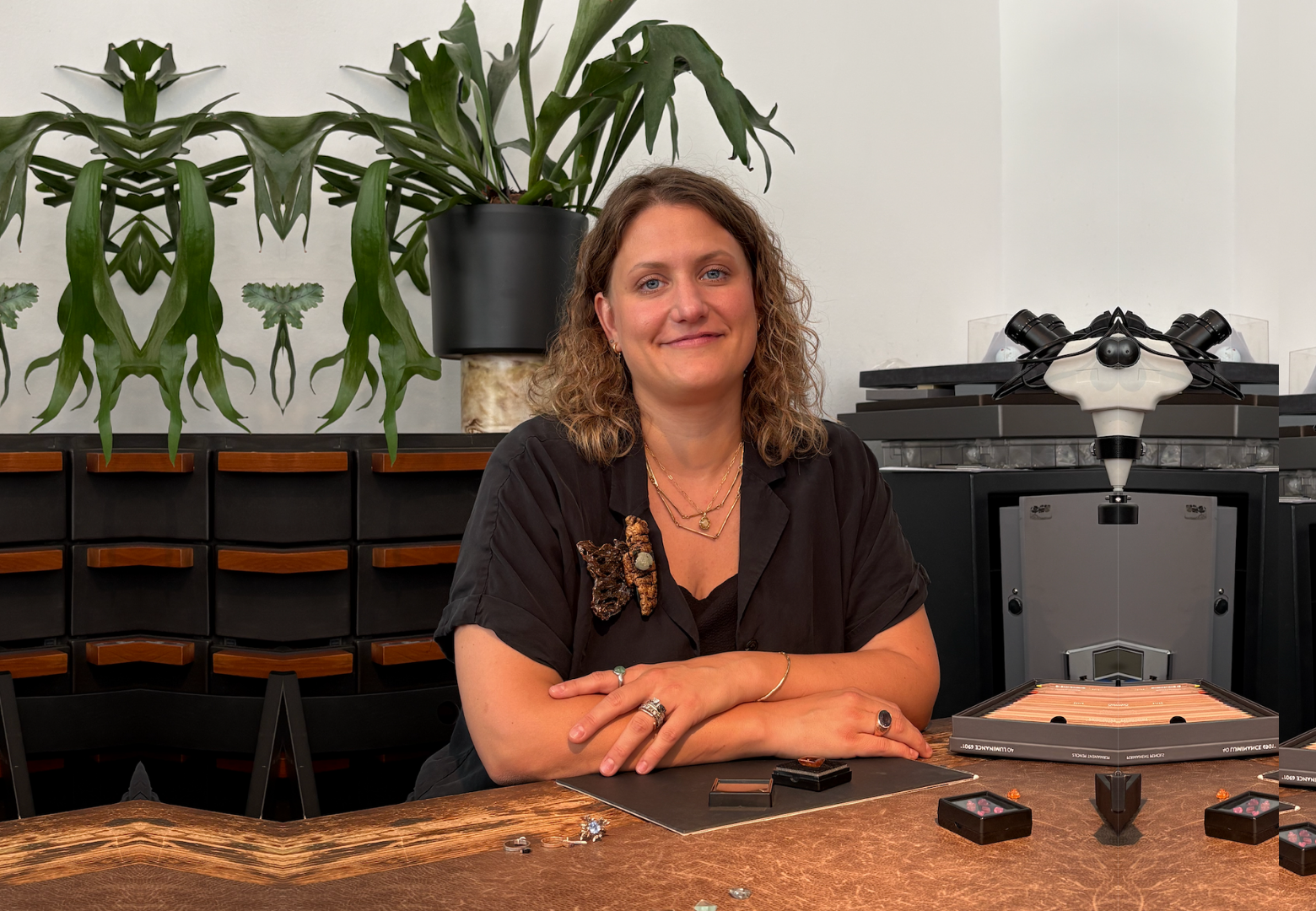
Angelina Kafka, founder of Atelier im Ersten: ”A handcrafted piece carries the time, decisions and personality of its creator. The wearer becomes part of that story, creating a very different emotional relationship with the jewellery”
In the heart of Vienna, where the artistic legacy of Jugendstil and the Wiener Werkstätte still resonates through the architecture of every atelier, goldsmithing extends beyond technical precision to assert itself as a contemporary visual language in constant transformation. For Angelina Kafka, the creative mind behind Atelier im Ersten, author jewellery transcends its status as a mere aesthetic accessory, becoming instead a symbiosis between the authentic spirit of the material and the personal imprint of creative vision.
Whether working with raw minerals, allowing their natural imperfections to dictate the creative trajectory, or exploring innovative cuts shaped by her own vision, such as the iconic fan cut, Angelina Kafka’s creations carry a distinctive emotional depth. They transcend the sterile perfection of mass-produced jewellery to celebrate a conscious and intentional form of luxury, created for the woman who embraces her authenticity and her own system of values as a form of personal expression.
Taking part in Romanian Jewelry Week, which takes place from September 30 to October 4, Angelina Kafka opens the doors to her Viennese atelier, inviting us into a dialogue about the discipline of craftsmanship, the courage of artistic vision, and the alchemy that emerges between the identity of the woman who wears a piece of jewellery and the authentic spirit of the material itself.
Angelina, your journey began in the heart of Vienna: a space where historical craftsmanship and the avant-garde coexist effortlessly. What initially sparked your passion for goldsmithing, and how has Vienna’s artistic ethos shaped your creative identity and the birth of „Atelier im Ersten”?
I have always been a creative person. At the Herbststrasse School of Arts and Crafts in Vienna, I was able to explore many different materials and disciplines – from wood and ceramics to textiles, photography and painting. Metal fascinated me most because of its transformative nature: it can be shaped, melted down and created anew.
After graduating, I wanted to combine my artistic expression with practical professional experience. Jewellery offered me exactly that possibility – creating something artistic that people could actually wear and make part of their lives. In 2009, I began working with Alja Neuner, whose avant-garde approach had a strong influence on me.

„Atelier im Ersten” grew out of this journey. After my time with Alja Neuner, I began working together with my former colleague, Ivana Stingic, who comes from a shop management background, to continue developing and expanding my designs. In a way, the atelier carries forward part of the Neuner tradition, while giving it a distinctly personal direction.
Vienna has always influenced my visual language through its extraordinary heritage of craftsmanship, such as Jugendstil and the Wiener Werkstätte. I see myself as part of this tradition, while interpreting it in a contemporary way and through my own perspective.

What did the very first piece you ever crafted look like, and what was the defining moment you realized this was your true calling?
I honestly don’t remember exactly what my very first piece looked like. After school, I entered professional life almost immediately and worked very intensively on commissions. That period taught me the reality of goldsmithing – not only the technical skills, but also sales, consultation and, most importantly, how people relate to jewellery and the relationship they develop with it.
The artistic foundation from school gradually came together with the discipline of professional craftsmanship. What I do remember very clearly is my first jewellery collection: the Bubble Collection. It combined unusually cut stones with my own distinctive forms, and I still carry the collection with me in the atelier today.
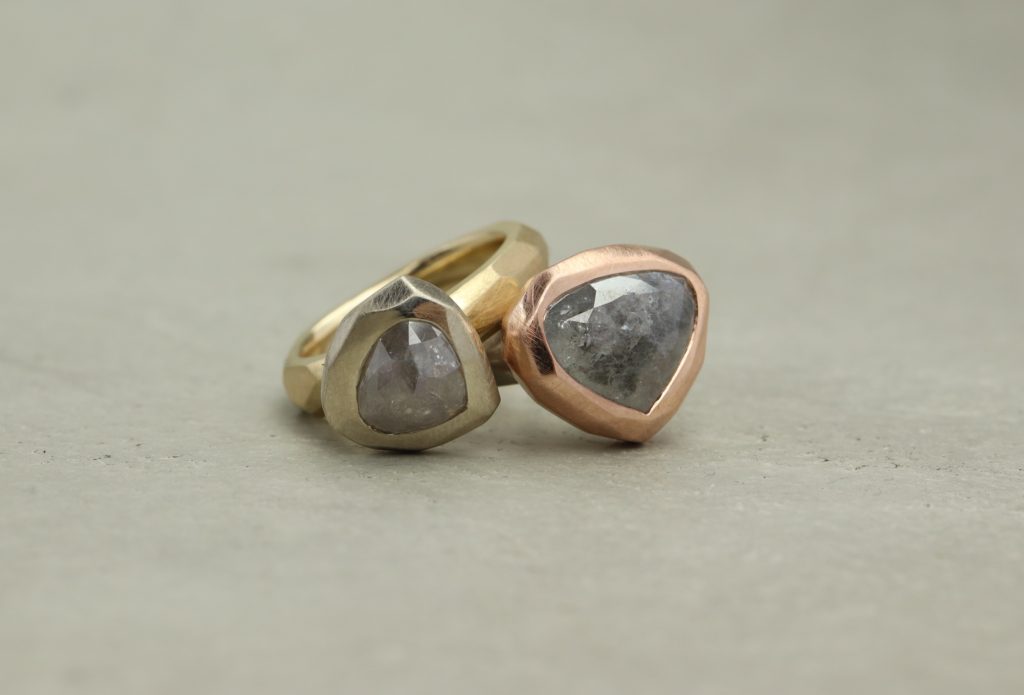
Looking back, I don’t think there was one dramatic moment when I discovered my calling. It was rather a gradual realisation that jewellery allowed me to bring together art, craftsmanship and people.
Your creations explore organic textures, raw minerals, and rock crystals; both uncut and meticulously faceted. In the quiet intimacy of your studio, how does the dialogue between artist and material unfold: does the stone dictate the design, or does the concept seek out its matter?
There are actually two very different approaches in my work.
When I work with a raw mineral, the stone comes first. Every crystal is unique in its shape, structure, inclusions and natural imperfections, so I have to respond to what the stone is already telling me. In that case, the crystal dictates the design, or you have to find a way how it fits.
With faceted or specially cut developed stones, the process can be reversed. I may develop the jewellery first and then work with the stone cutter to create a cut or shape specifically for the design.
I love this contrast: one process begins with something created by nature, the other with an artistic idea. Ultimately, both are about finding the right balance between creative intention and the character of the material.
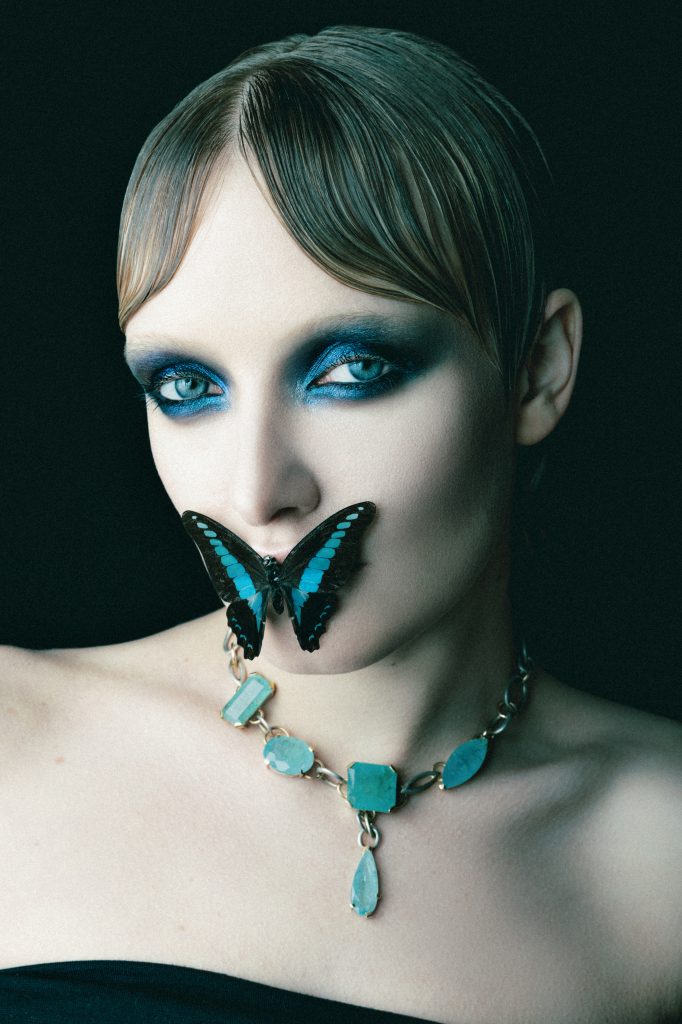

Historically, goldsmithing has been a craft governed by rigid traditions and standards. How did you navigate this exacting discipline to carve out a distinct, feminine artistic voice that is fully anchored in the contemporary world?
Yes, that is true – goldsmithing is a very traditional and technically precise craft. At the same time, my generation was fortunate to grow up during a period when many of these traditional boundaries had already begun to open up.
For example, from the 1970s onwards, artists such as Fritz Maierhofer in Austria were already challenging traditional ideas of jewellery. We encountered artists like this at art school, so experimentation was already a natural part of the environment we entered.
I have always had a strong desire to create things that others were not creating. But I never wanted to be different simply for the sake of being different. I want to capture the spirit of the time while still creating jewellery that can remain timeless.
For me, tradition is therefore a foundation rather than a limitation. I want my jewellery to combine innovation and tradition, individuality and wearability, contemporary expression and lasting value.
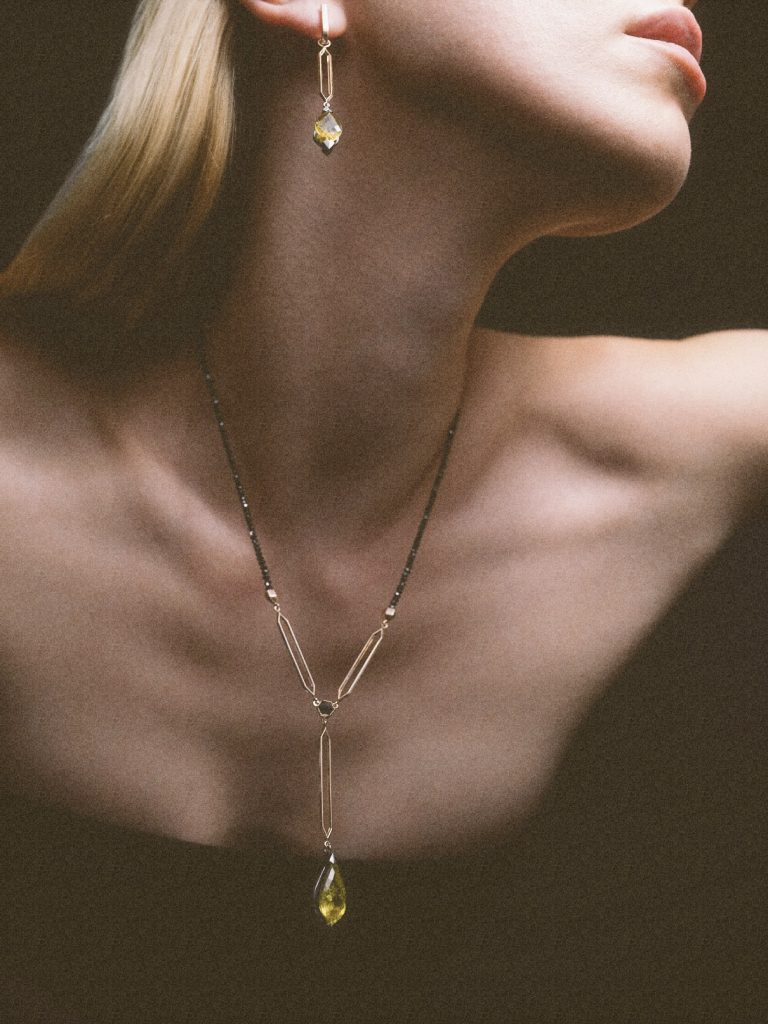
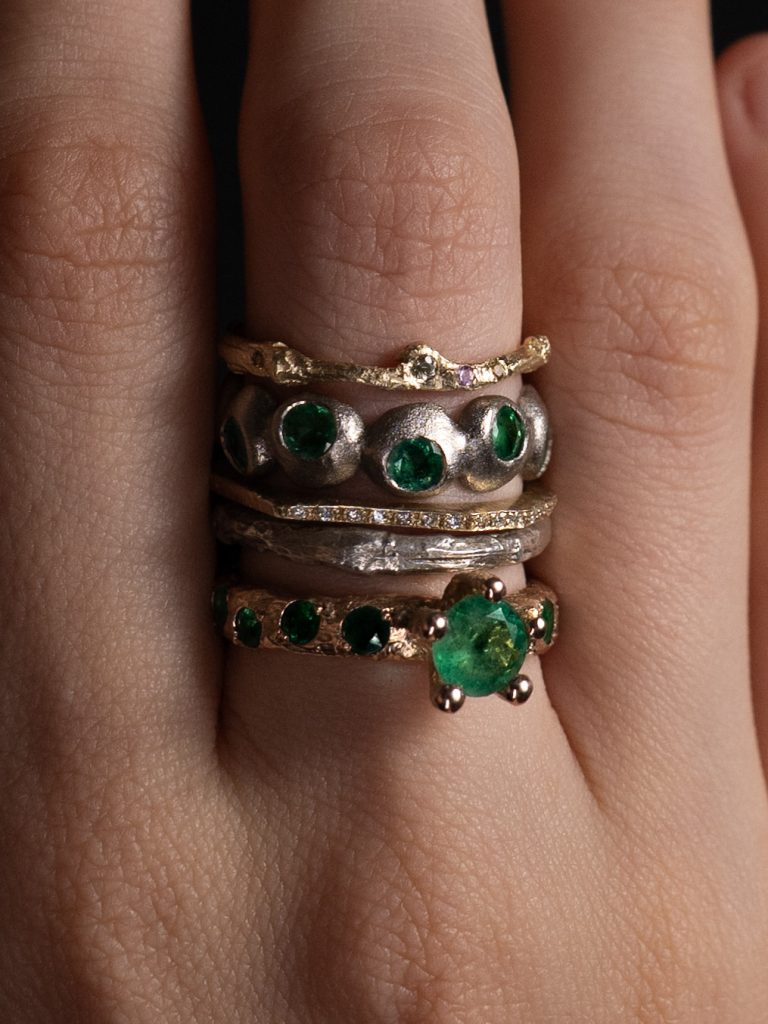
You place profound importance on sustainability and the ethical provenance of your stones and metals. How do you define „conscious luxury” within the realm of contemporary jewelry?
For me, conscious luxury begins with awareness, respect and appreciation. Luxury can no longer simply be about rarity, price or exclusivity. We need to be conscious of the resources we use and of the people and processes behind every object. I think it is beautiful to ask: Where does this come from? Who made it? What is behind it?
For me, luxury means appreciating the material, the craftsmanship, the people behind it and the time required to create something properly. When a piece carries that care and responsibility, it becomes more than an aesthetic object. It becomes a personal statement about what the wearer values. Conscious luxury, to me, is not about having more, but about knowing the value of what you have.

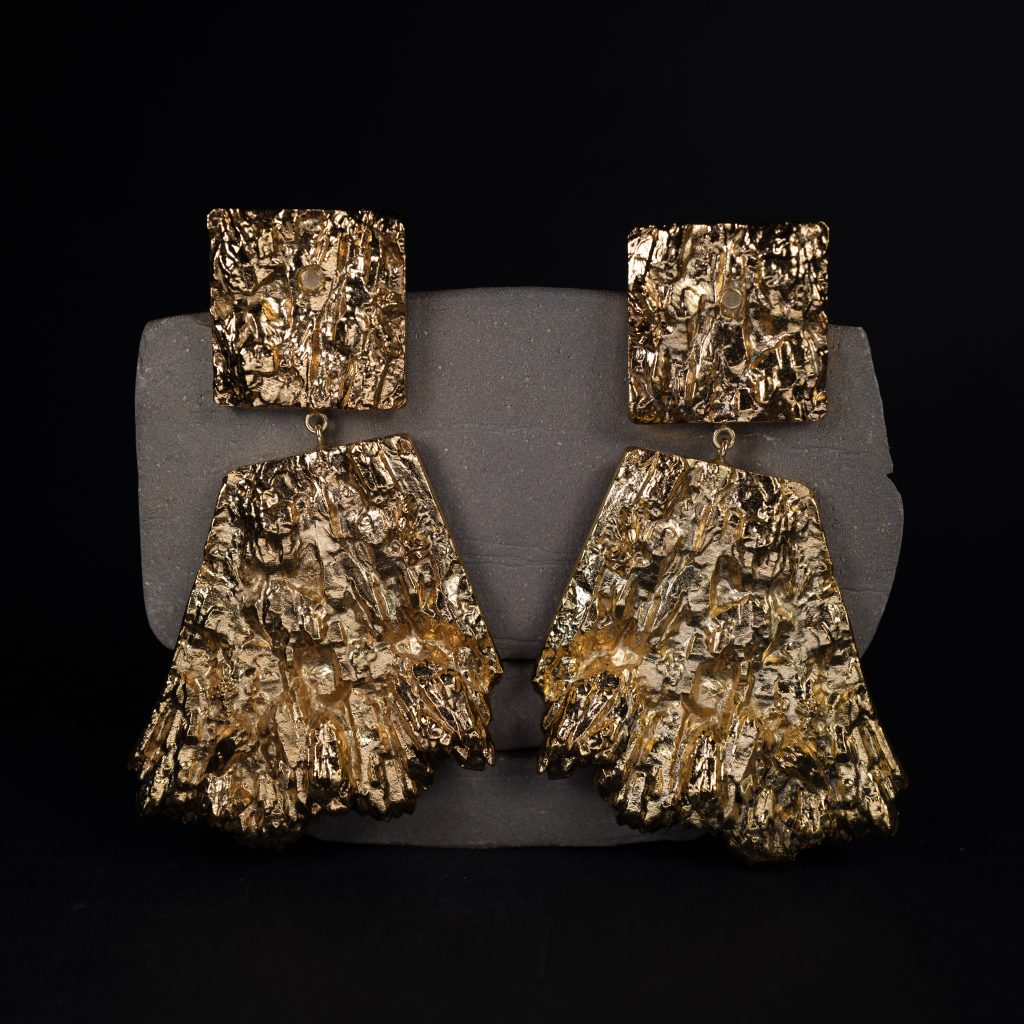
In your series featuring minerals and rock crystals, you often allow raw angles, inclusions, and natural imperfections to take center stage. What draws you to nature’s unrefined character over the sterile perfection of industrially cut gems?
Of course, I also appreciate the beauty of a flawless, loup clean gemstone. Exceptional colour, clarity and cut are incredibly rare and have their own value.
But I have always loved looking beyond the conventional idea of perfection. A stone with inclusions, an unusual cut, an unexpected colour or a rough surface can possess an extraordinary beauty. These qualities can give a gemstone personality. They can make it edgy, unexpected and expressive. I also believe that gemstones can reflect something of the personality of the person who chooses them.
Beauty does not have to be perfect to be exceptional. Sometimes it is precisely the unexpected detail that makes a stone unforgettable.
How do you feel a piece of bespoke art jewelry transforms the inner state, or even the presence, of the woman wearing it?
Bespoke jewellery creates a very personal dialogue between the piece and the woman wearing it. Sometimes a client comes with a very clear idea; sometimes she simply comes to be inspired. My role is to understand her personality, energy and aesthetic sense and translate something of that into the piece.
But the relationship also works in the opposite direction. Jewellery can bring out something in a woman that was already there but had perhaps not yet been expressed. And sometimes the woman gives the jewellery even more than the jewellery gives her. The same piece can have a completely different presence on two people. Not every woman suits every piece – and I find that beautiful.
The magic happens when the personality of the woman and the character of the jewellery meet.
We live in an age of mass production and fleeting trends. In your experience, what inspires women to gravitate toward artisanal, narrative-driven jewelry?
Globalisation has transformed the jewellery world enormously. Mass-produced jewellery is more accessible than ever and, especially for younger people, offers an affordable way to express individuality and follow trends.
Handcrafted, narrative-driven jewellery belongs to a different category. There is a person behind it – someone who developed the idea, made decisions about the materials and often actually created the piece by hand. People are increasingly interested not only in the jewellery itself, but also in the artist behind it. They want to understand the story and feel connected to the creative world behind the object. A handcrafted piece carries the time, decisions and personality of its creator. The wearer becomes part of that story, creating a very different emotional relationship with the jewellery.
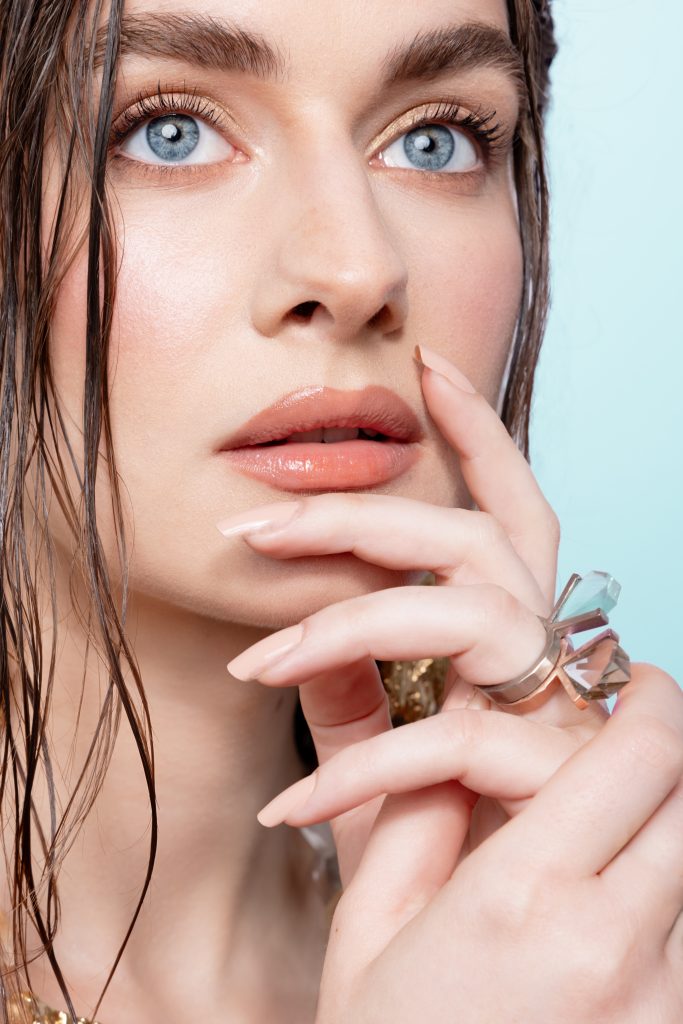
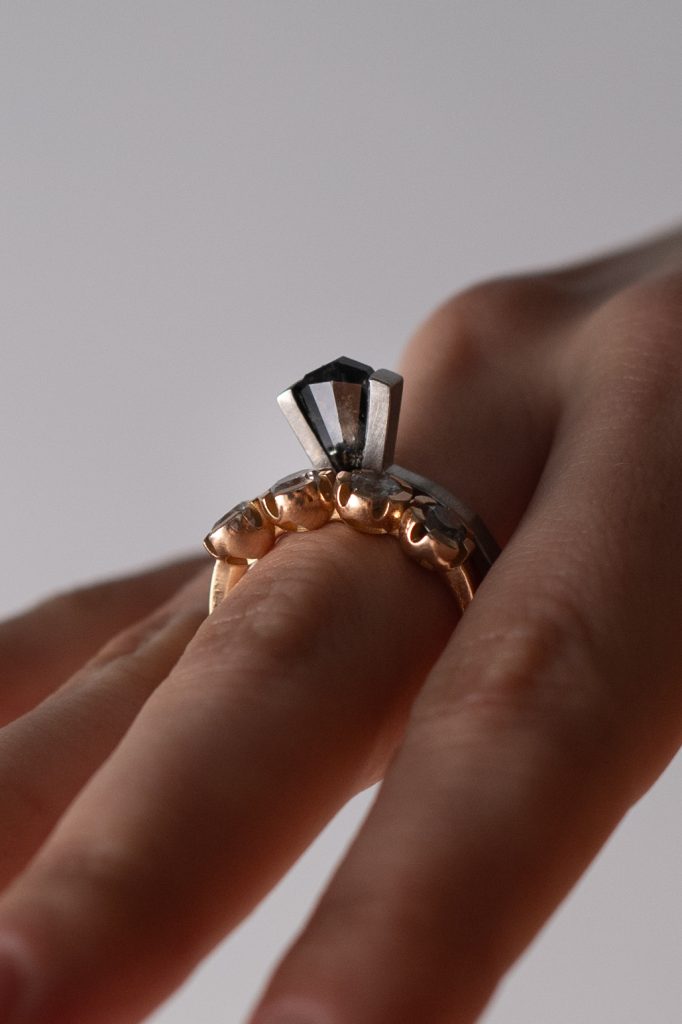
Navigating entrepreneurship in sustainable luxury requires a delicate balance between artistic sensibility and commercial rigor. Throughout your path, what compromises have you consciously refused to make to preserve your creative integrity?
I learned early that running an atelier requires a balance between artistic freedom and economic reality. My time with the Neuner family taught me how important certain commercial decisions are for the long-term existence of an atelier. I don’t see commerce and creativity as opposites. Some collections need to be reproducible and economically viable, and yet we can still give them individuality through carefully selected stones and materials.
One-of-a-kind pieces work differently. They give me the freedom to start from the beginning, explore new subjects and develop new forms without knowing exactly where the process will lead. That is why I consciously make time for this kind of work, particularly around exhibitions. The compromise I have always refused to make is giving up the freedom to create something simply because I don’t yet know where it will lead.
If you were to describe the woman who wears an Angelina Kafka piece in just a few words, what would they be?
There isn’t one particular type of woman. My jewellery explores very different forms and therefore speaks to very different personalities. What connects these women is not how they look, but what they value. They appreciate craftsmanship, individuality and quality. They want to express themselves rather than simply follow a trend.
They are also interested in the story behind the piece – the material, the person who created it and the thought behind it. If I had to describe her in a few words, I would say she is curious, individual, sometimes courageous, and appreciates genuine craftsmanship.
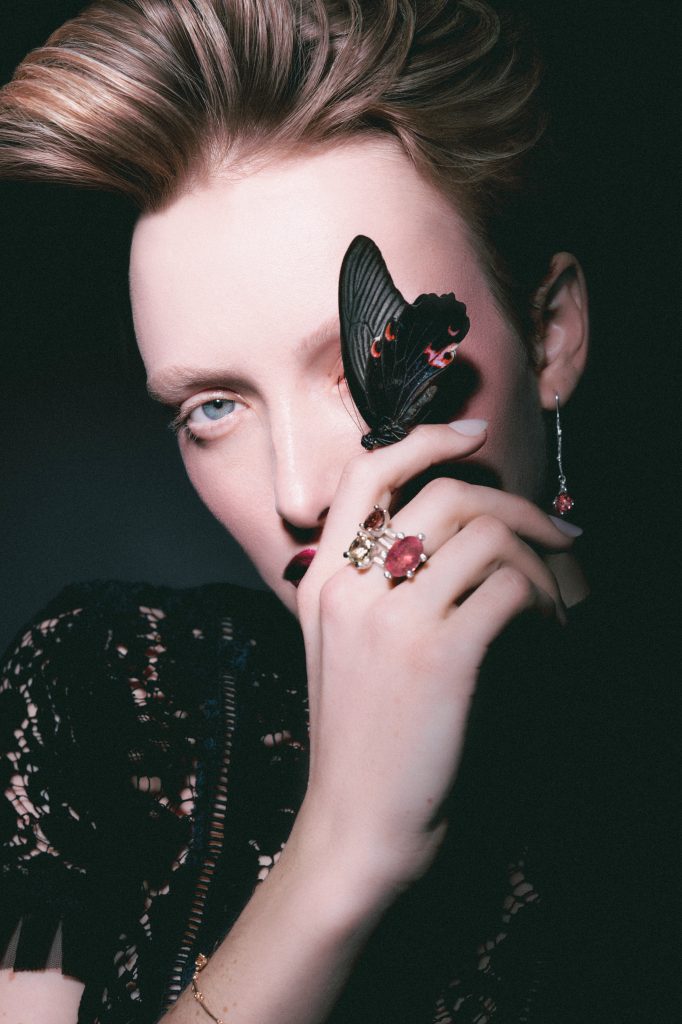
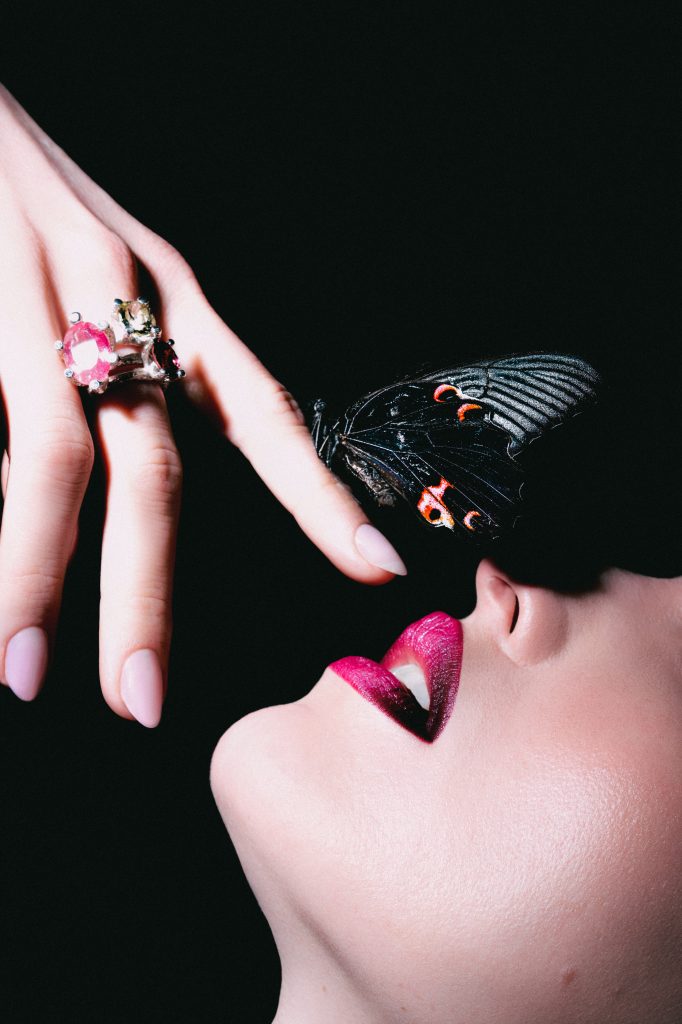
Each one-of-a-kind piece begins with a curated selection of rare stones with distinctive hues and singular character, discovered through travels and collaborations with master gemologists. What are those unseen, intuitive cues that tell you a stone is „the one,” and how does its essence steer your design process to completion?
Choosing a stone is a combination of intuition, experience, research and personal taste. There is no single formula. For collections, I pay attention to what people respond to – colours, tones and stones that feel contemporary and have a natural appeal. For one-of-a-kind pieces, I look for uniqueness. How often have I seen something like this before? Is there something special about its colour, structure or character?
But ultimately, I have to love the stone myself. My own aesthetic instinct is essential. If I don’t feel something when I look at a stone, there is no reason to bring it into the atelier. Once I have chosen it, its colour, proportions, structure and character often guide the direction of the design. It is a balance between understanding what people are looking for and trusting my own eye.
You are exhibiting at Romanian Jewelry Week in the contemporary section. What story does your collection bring to Bucharest, and what core emotion do you hope to evoke in the audience?
For Romanian Jewelry Week, I wanted to present something very personal: highlights from the work that has shaped my atelier over the years. The collection brings together different aspects of my design language – including pieces featuring the fan cut, a gemstone cut that I developed myself, timeless classics and one-of-a-kind pieces made from carefully selected raw materials and rare stones. In a way, the exhibition is almost like an archive – a timeline of my artistic development, showing different ideas, materials and forms that have shaped my work.
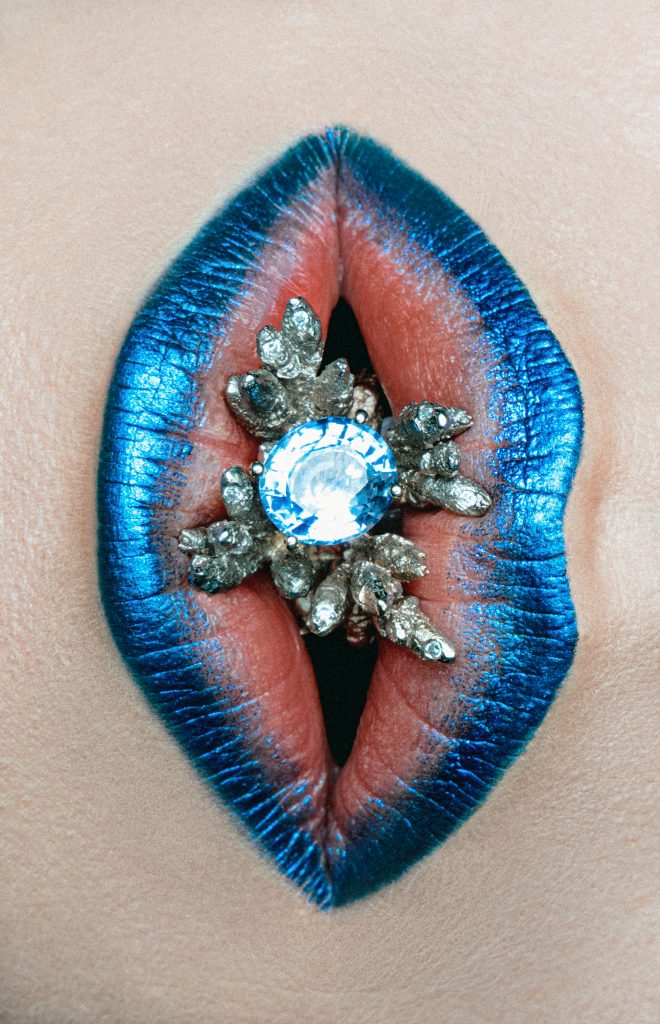
I hope the audience feels not only admiration for the individual pieces, but also curiosity about the world behind them – the craftsmanship, individuality and emotion accumulated over the years.
Studio work is inherently solitary, yet jewelry demands to be touched, tried on, and felt against the skin to be fully appreciated. Why is it vital for a designer to step out of the sanctuary of the atelier and experience how people genuinely interact with their work?
Our atelier is actually the opposite of a solitary place. It is an open environment where people come together, exchange ideas and interact with the work. Conversation is an important part of my creative process. A client, another artist or even someone from a completely different field can offer a perspective that changes the way you see something.
Jewellery is also an intimate medium because it lives on the body. Seeing how someone moves with a piece, how they respond to it and how they feel wearing it tells me things that I cannot discover simply by looking at the piece itself. Travel makes this process even richer. Different countries, cultures and ways of seeing the world continually inspire me and allow me to return to my own work with fresh eyes. I don’t believe creativity thrives in isolation. It needs dialogue, curiosity and movement. The atelier may be where the jewellery is made, but the world outside it is where many of the ideas that shape it come from.
–
You can read the interview in Romanian here.
–
Editor: Giulia Timiș
You may also like
Sofie Boons, Designer de Bijuterii: „Cred că bijuteria e o oglindă a societății care o produce”
Ce se întâmplă atunci când rigoarea laboratorului de chimie întâlnește sensibilitatea designu
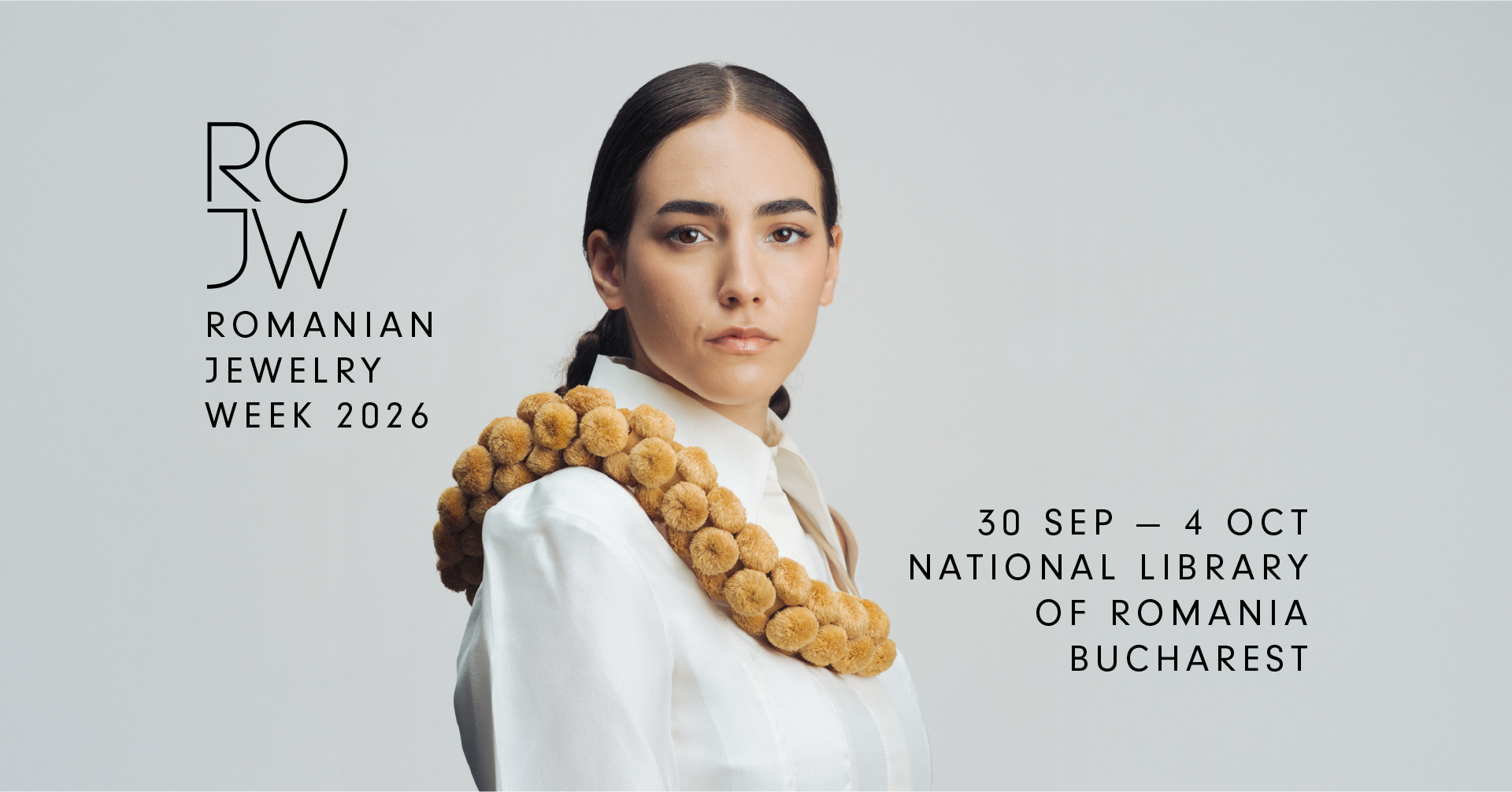
Romanian Jewelry Week 2026: Târg și Expoziții în București
Între 30 septembrie și 4 octombrie 2026, București găzduiește cea de-a șaptea ediție a Romani

Claudia Pușcașiu, fondatoarea SAKRA: „Mă interesează acea calitate a execuției care nu are nevoie să iasă în evidență, dar pe care o simți atunci când privești și porți bijuteria”
Claudia Pușcașiu este fondatoarea SAKRA, un brand de bijuterie contemporană născut la intersecț
